Canadian Split Red Lentils Bulk Export Supply Program
Split red lentils are a high-velocity export item for importers, wholesalers, and food manufacturers that need fast-cooking performance and consistent processing outcomes. Bennett’s Lentils supplies Canadian split red programs through structured seasonal execution—coordinating cleaning, dehulling/splitting, and packing through qualified partners, then confirming each shipment by lot against the buyer’s grade targets. The result is straightforward: clear specifications, reduced receiving risk, and documentation aligned to the destination market—without relying on generic online “standard specs.”
Processors and manufacturers where cook time and consistency matter
Packagers that require stable appearance and low foreign material
Buyers who must match a destination or customer specification
If your end market is sensitive to color tone, split uniformity, or fine material, share those expectations at RFQ stage so the execution plan (grade targets + process controls + pack format) is built correctly from the start.
Split Red Grade Targets & Lot Confirmation
Split red is usually evaluated differently than whole lentils because the receiving risk is often tied to format performance (uniform splits, appearance, and cleanliness). We build the quote around your grade targets and confirm the shipped lot against those targets prior to loading.
Common grade variables (set at quote, confirmed by lot):
Moisture maximum (contract target)
Foreign material limit (contract target)
Fine material / dust tolerance (destination-dependent)
Split integrity and uniformity expectations
Discoloration / dark pieces tolerance (contract target)
Sizing / screen profile (when required by the buyer)
Example spec table (for quoting structure):
Item
What the buyer defines
How it’s verified
Moisture
max target
lot testing / COA if requested
Foreign material
max target
cleaning/inspection confirmation
Fines/dust
tolerance
process outcome + verification
Color/appearance
acceptable range
grading + buyer-aligned expectations
Split uniformity
target outcome
lot verification prior to load
Special requirements
destination/customer-specific
agreed at quote
Packaging & Load Configuration
Packaging is selected based on destination handling and downstream workflow:
Bags (common export formats used in bulk trade)
Food-grade totes (when operations prioritize faster discharge and reduced handling)
For split products, load configuration matters because buyers often track:
Lot identification (to prevent mixed outcomes on receiving)
Handling preferences (pallet/no pallet, slip sheets where applicable)
If you have repacking operations or retail labeling requirements, include label format and lot-coding needs at RFQ stage to avoid rework during execution.
Trade Terms & Shipment Planning
Split red programs usually move best when the quote is built around a clear shipment plan: destination + target window + execution format. We can structure offers around FOB, CFR, or CIF (where applicable), depending on route and booking conditions.
To keep landed cost predictable, we align:
grade targets and verification method
pack format and container approach
any inspection/testing requirements
final shipping window confirmation at booking
This reduces delays and minimizes claims tied to misaligned expectations at destination.
Export Documentation & Market Alignment
Split red shipments often move into food channels, so documentation clarity matters. Typical export documentation includes:
Commercial invoice
Packing list
Bill of lading
Destination-dependent additions can be supported where required/requested:
Phytosanitary certificate
Certificate of origin (if requested/required)
COA / lab testing (moisture, defects, FM, etc.)
Third-party inspection (upon request)
If your customer requires specific wording, legalization steps, or additional data fields for clearance, include those requirements in the RFQ so documentation is planned—not improvised.
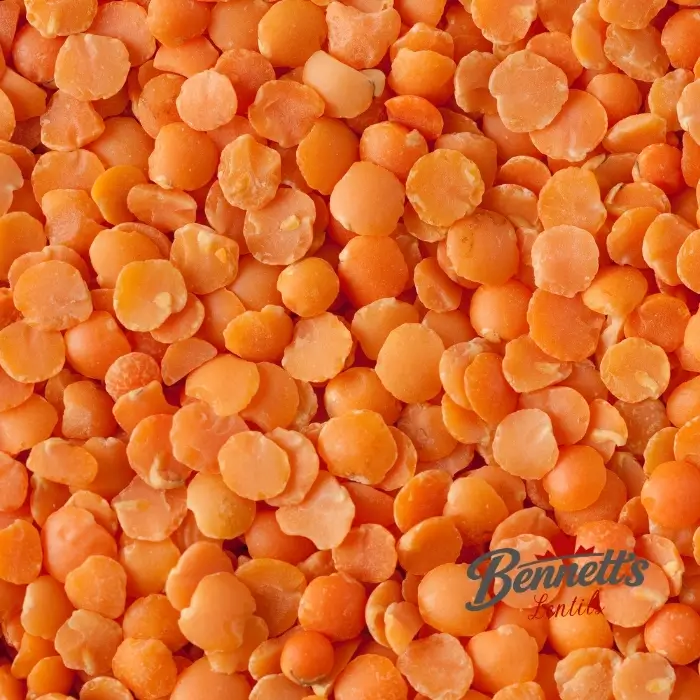
Split red lentils are widely purchased for fast cook time and a predictable finished texture in food manufacturing and wholesale channels. Buyers often evaluate split red on “how it performs” rather than simply “what it is,” which is why grade targets commonly emphasize:
uniform split profile
clean appearance (low FM and controlled defects)
stable color expectations aligned to the end market
controlled fines to support handling and pack consistency
If your end-use is sensitive (e.g., manufacturing lines, private-label pack specs, or strict retail appearance), you should request targets for split uniformity, color, and fines at quotation stage.
No. Split red is a processed format (dehulled and split). Whole red is the unprocessed seed format. If your end market requires split performance targets (uniformity, fines, color), specify them in the RFQ so the program is built around those outcomes.
Most buyers prioritize low foreign material, controlled fines, consistent appearance (including color expectations), and split uniformity. If you’re packing for retail or supplying food manufacturers, define these targets early to reduce receiving risk.
Yes—provided we receive the destination/customer spec at RFQ stage. Share your limits (FM, moisture, defects, fines, split uniformity, and any color expectations) so the execution plan matches the receiving standard.
Bags are common in bulk trade, and food-grade totes can be used when buyers prefer faster discharge and less handling. Packaging, labeling, and lot identification are confirmed at quotation based on destination and buyer workflow.
No. Export pricing depends on grade targets, volume, packaging, destination, and trade terms. Send your RFQ details and we’ll return an offer aligned to your shipment window and receiving requirements.
Destination, trade term, volume, packaging, grade targets (including fines and split uniformity), and shipping window. With these six inputs, we can price without repeated follow-ups.