Canadian Lentils Bulk Export Programs (Red & Green)
Bennett’s Lentils supplies Canadian lentils through structured export programs built for importers, wholesalers, retail packers, and food manufacturers. Instead of “generic specs,” we quote to your destination requirements, confirm grade outcomes by lot prior to load-out, and plan documentation into execution. This hub helps you choose the right lentil program (red or green) and shows exactly what information we need to deliver a fast, accurate quote for container-based shipments.
Canadian lentils
- Lentil programs
- How our export programs run
- Specification framework
- Packaging & load options
- Trade terms & documentation
- Saskatchewan origin
- Request a quote
- Buyer FAQs
Lentil Programs (Choose by Format or Size Class)
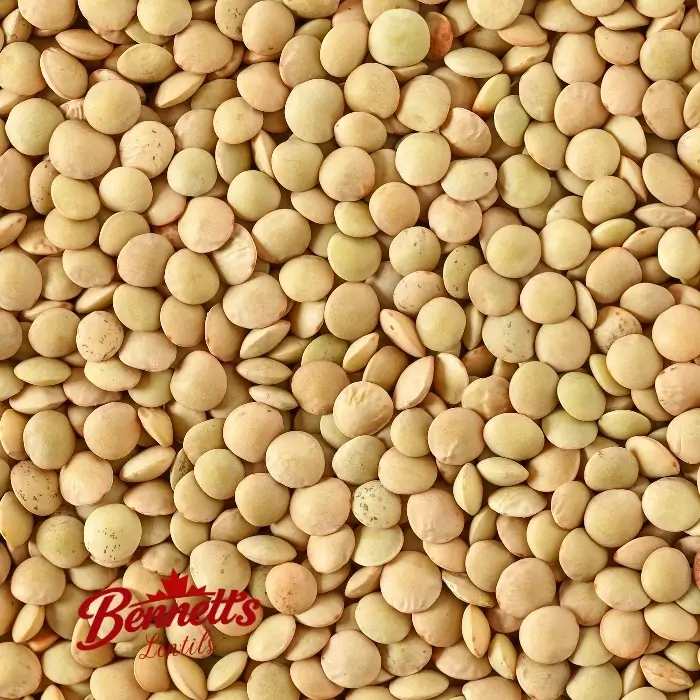
Eston (small green) programs fit buyers whose customers notice size. Typical buyers include importers serving retail-pack channels, distributors supplying foodservice, and manufacturers who need stable performance in prepared foods. Small green is often chosen when the end market prefers a tighter, smaller seed profile than large or medium greens. If your customer specification defines a “small green” size profile or screen requirement, share it early—because size distribution is one of the fastest reasons shipments get flagged on receiving.
Crimson (Whole Red)
Whole-format red programs for buyers who need flexibility for downstream use or market-specific requirements.
Split Red (Dehulled & Split)
Finished split format for fast-cooking performance, appearance control, and low fines targets.
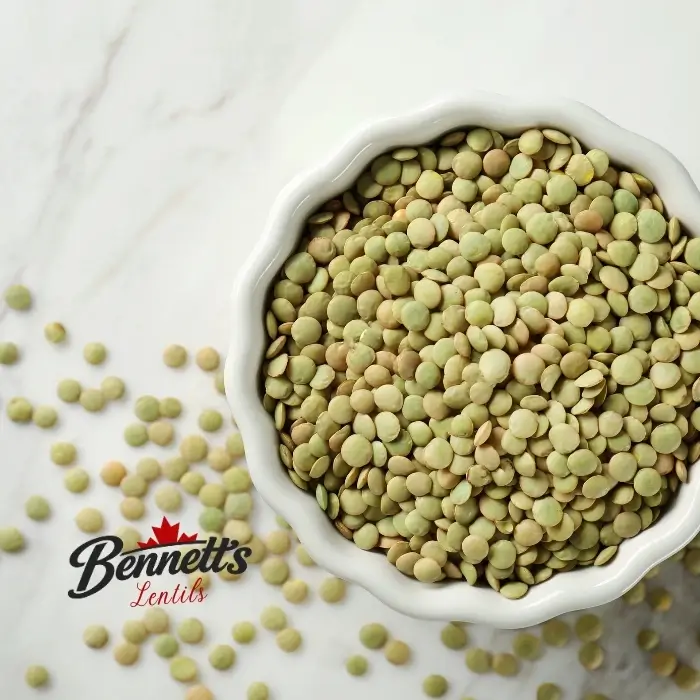
Laird (Large Green)
Large-seed green programs for markets where size profile and visual presentation drive acceptance.
Richlea (Medium Green)
Medium-green programs for buyers who need a defined calibre position between large and small greens.
Eston (Small Green)
Small-seed green programs for repack and customer specs that require a tight size distribution.
Specification Framework (Quote Structure, Not “Marketing Specs”)
We price and execute against buyer-defined targets. Typical parameters include:
| Parameter | Why it matters at destination |
|---|---|
| Moisture max | storage stability & handling |
| Foreign material limit | clearance, claims risk, pack appearance |
| Defect tolerances | product consistency & customer acceptance |
| Sizing / screens (greens) | “size-class” acceptance for repack/retail |
| Fines (split red) | discharge, pack consistency, customer complaints |
| Appearance expectations | market-driven acceptance |
If you have a destination spec sheet, send it with your RFQ—your quote will be faster and more accurate.
Packaging & Load Options (Choose What Fits Your Workflow)
We confirm packaging and load format at quotation so receiving is predictable:
- Bags (bulk trade formats used for wholesale and distribution)
- Food-grade totes (for faster discharge and reduced handling)
- Labeling & lot coding (language, buyer references, batch/lot identifiers)
- Container planning (20’ / 40’, stuffing strategy, handling notes as needed)
If you’re a repacker or private-label operation, include label fields and lot/traceability requirements in your RFQ.
Trade Terms, Routing & Documentation (Execution Reality)
Trade terms
Offers may be structured around FOB / CFR / CIF where applicable, depending on destination routing and booking conditions.
What we document
A standard export set typically includes:
- Commercial invoice
- Packing list
- Bill of lading
Destination-dependent items can be coordinated where required/requested:
- Phytosanitary certificate
- Certificate of origin
- COA / lab testing
- Third-party inspection (optional)
Tell us the destination country/port and any compliance wording requirements upfront—paperwork is easiest when it’s planned, not patched.
Saskatchewan Origin (Why Buyers Reference It)
Most Canadian lentils move through Prairie supply channels, and Saskatchewan is widely recognized as the core production region for lentils in Canada. For international procurement teams, origin matters because it affects seasonal availability, supply concentration, and execution planning—especially when programs are built around size class (greens) or processed format (split red).
Request a Quote (Fast & Accurate)
Send these six items and we can quote without back-and-forth:
- Destination (city/port + country)
- Incoterm (FOB / CFR / CIF)
- Volume (MT + container count)
- Packaging (bags/totes/bulk + labeling needs)
- Specification targets (moisture, FM, defects, sizing/screens)
- Target shipping window (month/period)
Buyer FAQs (Hub-Level)
What’s the difference between “market class” and “format”?
Market class usually refers to size/type positioning (e.g., large green vs small green). Format refers to processing state (e.g., whole vs split). Your RFQ should clarify both where relevant.
I’m buying “green lentils”—how do I pick the right program?
If your market cares about size, choose by size class (Laird/Richlea/Eston). If size isn’t specified, tell us the end-use and destination and we’ll recommend the best-fit program.

Can you build offers around a tender shipping window?
Yes—if the destination, trade term, packaging, and grade targets are clear early. Windows work best when execution details are locked at quotation.
What usually causes delays or re-quoting?
Missing destination, unclear trade term, no grade targets, or unspecified packaging/label fields. Use the six RFQ items above.
Can you support first-time buyers who need extra verification?
If you require COA/testing or third-party inspection, include it in the RFQ so it becomes part of execution—not a last-minute add-on.
Can I source red and green programs under one procurement plan?
Often yes, depending on timing and execution constraints. Send volumes and windows for each program and we’ll map a practical plan.